There is something inherently celebratory about a perfectly executed mango mousse cake. It is not just a dessert; it is a structural marvel that balances the tropical intensity of ripe mangoes with the ethereal lightness of a cloud-like cream.
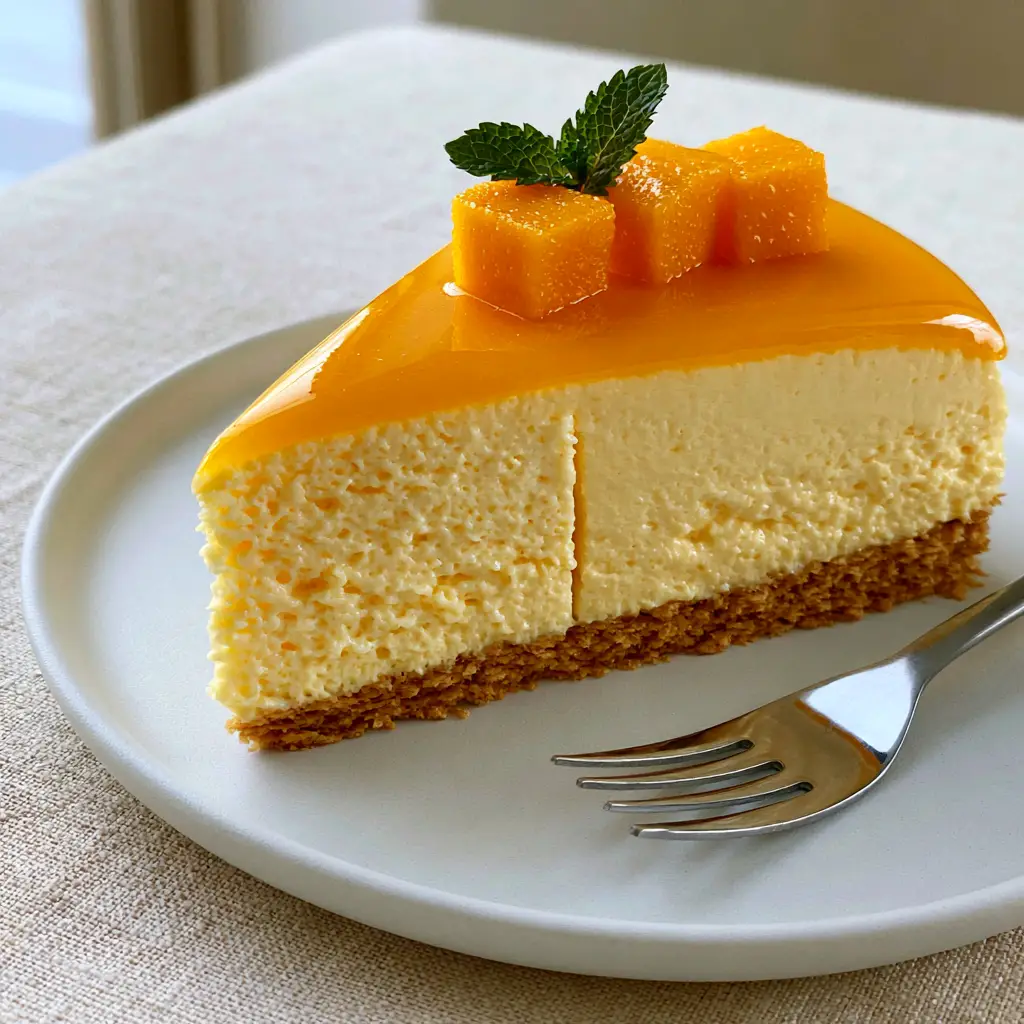
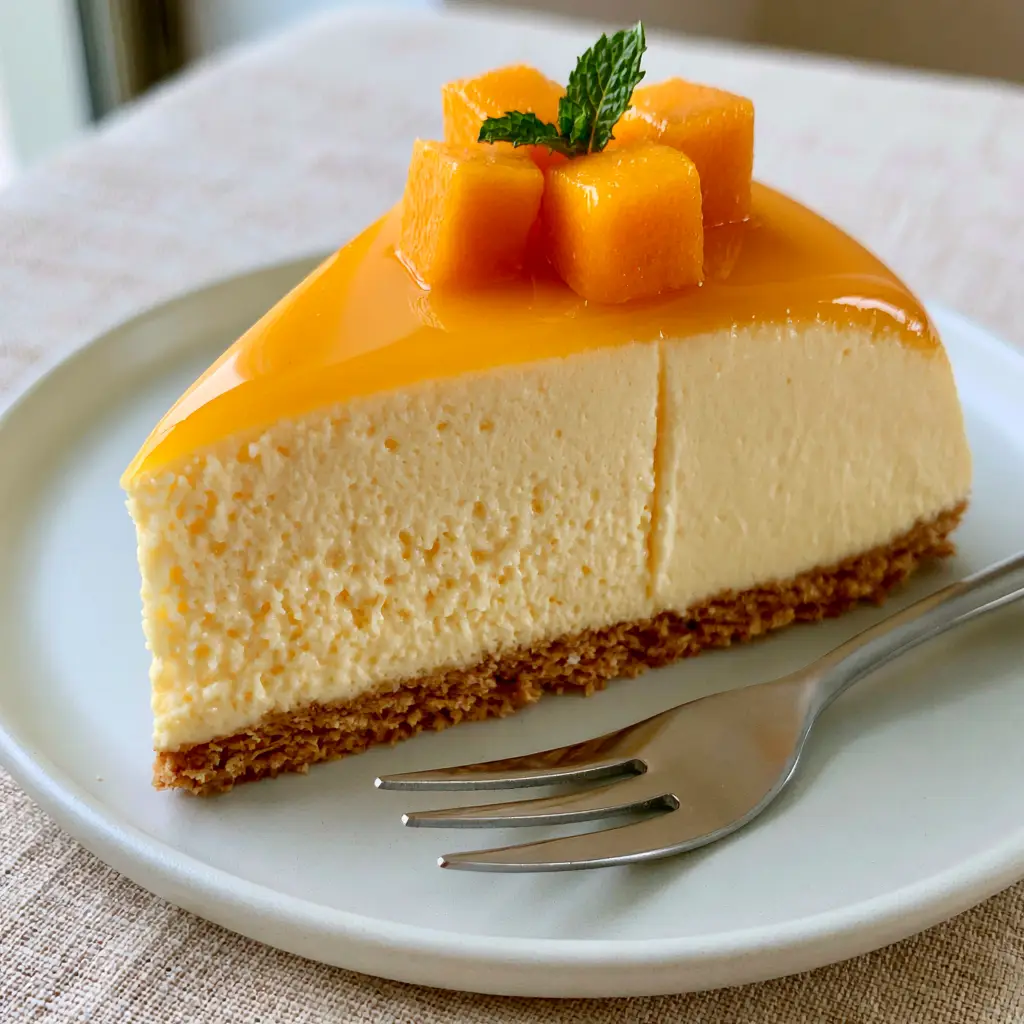
In this recipe, we are focusing on creating a sharp-edged, professional-grade slice that looks like it stepped out of a high-end patisserie window. Imagine a vibrant, high-gloss orange glaze reflecting the morning light, sitting atop a pale yellow mousse filled with tiny, delicate air bubbles.
Every bite offers a contrast between the buttery crunch of a golden-brown biscuit base and the velvety smooth fruit cream. Whether you are hosting a summer soirée or simply want to master the art of the fruit mousse, this guide will walk you through the forensic details of this tropical masterpiece.
The Architecture of the Perfect Tropical Slice
- Triple-Layer Definition: Achieve three distinct, perfectly horizontal layers including a pressed crumb base, airy mousse, and a reflective mirror glaze.
- Aerated Texture: We use specific whipping techniques to ensure the middle layer is light, stable, and filled with micro-bubbles for that signature “mousse” mouthfeel.
- High-Gloss Finish: Learn the secret to a mango mirror glaze that stays vibrant and reflective even after chilling.
- Alphonso Intensity: By utilizing the “King of Mangoes,” we ensure the flavor is concentrated, sweet, and naturally aromatic without excessive added sugar.
If you love this profile, you might also enjoy our authentic mango tres leches cake for a different take on soaked tropical sponge textures.
The Elements of a Perfect Mango Masterpiece
Creating a mango mousse cake requires a blend of fresh produce and structural pantry staples. Each ingredient serves a specific culinary function to ensure the cake stands upright and tall on a matte white plate.
Digestive Biscuits or Graham Crackers: You will need 200g (approx. 1.5 cups) of finely crushed biscuits to create the foundation. These provide the necessary “snap” and toasted flavor to offset the soft mousse.
Unsalted Butter: Use 100g (7 tbsp) of high-quality melted butter. This acts as the mortar for your biscuit base, ensuring it holds its shape when sliced with a silver dessert fork.
Alphonso Mango Puree: You need 500ml (2 cups) of smooth puree divided between the mousse and glaze. This specific variety provides the intense “vibrant orange” color seen in our visual blueprint.
Gold Grade Gelatin Leaves: Roughly 12g (about 4-5 sheets or 1.5 tbsp powder) is required to stabilize the fruit and cream. Gelatin is the invisible architecture that allows for those sharp, clean edges.
Heavy Whipping Cream: 400ml (1.7 cups) of chilled cream with at least 35% fat content. This is whipped to soft peaks to introduce the “visible tiny air bubbles” into the mousse layer.
Granulated Sugar and Lime Juice: 100g (0.5 cup) sugar and 1 tbsp (15ml) lime juice. The sugar macerates the fruit, while the lime acidity cuts through the richness of the dairy.
Fresh Toppings: One large mango, diced into 1cm (0.4 inch) cubes, and a single sprig of micro-mint. These provide the fresh “off-center” garnish that signals the dish’s handmade quality.
Essential Tools for Patisserie-Standard Results
To achieve the “sharp-edged” profile described in our visual prompt, specific equipment is non-negotiable. Using the right tools prevents the layers from bleeding into one another.
You will need an 8-inch (20cm) springform pan or a stainless steel cake ring. A cake ring is preferred by professionals for the smoothest possible sides.
Acetate cake collar film is the secret weapon here. Lining the inside of your mold with this plastic strip ensures that when you unmold the cake, the mousse remains perfectly vertical and smooth.
An offset spatula is vital for leveling the mousse before the glaze is applied. Without a perfectly flat surface, your mirror glaze will pool unevenly, ruining the “high-gloss” effect.
For more fruit-forward inspiration that uses similar precision, check out our refreshing Thai mango salad which focuses on the savory-sweet balance of the fruit.
Step-by-Step Construction of the Mango Mousse Cake
Forging the Golden-Brown Biscuit Foundation
Begin by pulsing your biscuits in a food processor until they resemble fine sand. There should be no large chunks remaining, as these will cause the base to crumble unevenly under the fork.
Mix the crumbs with the melted butter and a pinch of sea salt. The salt is a foundational invisible ingredient that enhances the “buttery” profile of the crust.
Press the mixture firmly into the bottom of your lined springform pan. Use the flat bottom of a measuring cup to pack it tightly, especially around the edges, then chill for 20 minutes.
Mastering the Aerated Mango Cream Layer
Bloom your gelatin in cold water for 5-10 minutes. While it softens, heat 100ml (0.4 cup) of the mango puree in a small saucepan until it just begins to simmer.
Squeeze the excess water from the gelatin and whisk it into the hot puree until fully dissolved. Combine this with the remaining cold puree and lime juice, stirring until the mixture starts to slightly thicken.
In a separate chilled bowl, whip the heavy cream to soft peaks. You are looking for a texture that holds its shape but still looks “wet”—this ensures the mousse remains airy rather than dense.
Gently fold the mango mixture into the cream using a silicone spatula. Do not overmix; you want to see those tiny bubbles encapsulated in the yellow cream. Pour this over the biscuit base and smooth the top with your offset spatula.
The High-Gloss Vibrant Orange Mirror Glaze
This final layer is what gives the mango mousse cake its “vibrant orange” reflective surface. Heat 150ml (0.6 cup) of strained mango puree with 50g (4 tbsp) of sugar.
Add 5g (2 tsp) of bloomed gelatin to the warm liquid. It is crucial to strain this mixture through a fine-mesh sieve to remove any air bubbles or undissolved fruit fibers.
Let the glaze cool to approximately 32°C (90°F). If it is too hot, it will melt the mousse; if it is too cold, it won’t spread into that “perfectly horizontal” layer.
Pour the glaze over the set mousse, tilting the pan slightly to ensure edge-to-edge coverage. Return the cake to the refrigerator for at least 4 hours, or ideally overnight.
Pro Tips for Forensically Accurate Results
- The Clean Slice Secret: To get the sharp edges seen in the prompt, dip a thin knife into boiling water, wipe it dry, and make one clean cut. Repeat the cleaning process for every single slice.
- Avoid the “Weeping” Glaze: Ensure your mousse is completely set and “cold to the touch” before adding the glaze. A temperature differential is what creates the bond.
- Puree Precision: If using fresh mangoes, always strain the puree. Mango fibers can ruin the “high-gloss” aesthetic of the top layer.
- Bubble Management: If you see bubbles on the surface of your glaze after pouring, lightly run a kitchen blowtorch over the surface (at a distance) to pop them instantly.
Looking for something a bit more casual? Our shaved ice mango bingsu offers those same tropical notes in a frozen, fluffy format.
Pairing and Presentation
The visual blueprint specifies a “minimalist matte white ceramic plate” and a “silver dessert fork.” This neutral background allows the vibrant orange and pale yellow hues of the cake to pop.
When garnishing, place your three small cubes of juicy Alphonso mango off-center. This asymmetrical look is a hallmark of modern plating. Add the tiny sprig of micro-mint last to ensure it doesn’t wilt.
This cake pairs beautifully with a crisp Prosecco or a light jasmine tea. If you’re planning a full dessert spread, these mango strawberry sunset cupcakes make a wonderful handheld companion.
Common Questions About Mango Mousse
Yes, but ensure they are fully thawed and strained through a fine-mesh sieve to remove excess water and fibrous bits that ruin the glaze gloss.
Yes, because of the gelatin and heavy cream, the cake will lose its structural integrity if left at room temperature for more than 30-60 minutes.
Use an acetate cake collar to line your mold and slice the cake while very cold using a hot, clean knife wiped dry between every cut.
Alphonso mangoes are the gold standard for their intense orange color and lack of fiber, though Kent or Ataulfo are good secondary options.
The glaze was likely too warm when poured. Ensure it cools to roughly 32°C (90°F) so it is viscous enough to set quickly upon contact with the cold mousse.
The Ultimate Mango Mousse Cake Recipe Card
Mango Mousse Cake with a Glossy Mirror Glaze and Biscuit Crust
Ingredients
Equipment
Method
- Combine crushed biscuits, melted butter, and salt. Press firmly into the bottom of an 8-inch pan lined with acetate. Chill for 20 minutes until set.
- Bloom 12g gelatin. Heat 100ml mango puree with sugar, dissolve gelatin, then mix with remaining puree and lime juice. Whip cream to soft peaks and gently fold into the mango mixture. Pour over the base and level with a spatula. Chill for 2 hours.
- Heat 150ml puree with sugar. Add 5g bloomed gelatin. Strain and cool to 32°C (90°F). Pour over the chilled mousse. Chill the entire cake for at least 4 hours.
- Top with fresh mango cubes and micro-mint before serving on a white ceramic plate.
Notes
Always strain your mango puree for a smooth finish.
Closing and Call to Action
Mastering this mango mousse cake is a journey into the heart of patisserie science. The result is a dessert that is as visually stunning as it is delicious, offering a true taste of the tropics in every sharp-edged slice.
If you enjoyed this forensic look at dessert building, please leave a comment below and let us know how your layers turned out! Don’t forget to share your creations and follow us on Pinterest for more culinary inspiration.