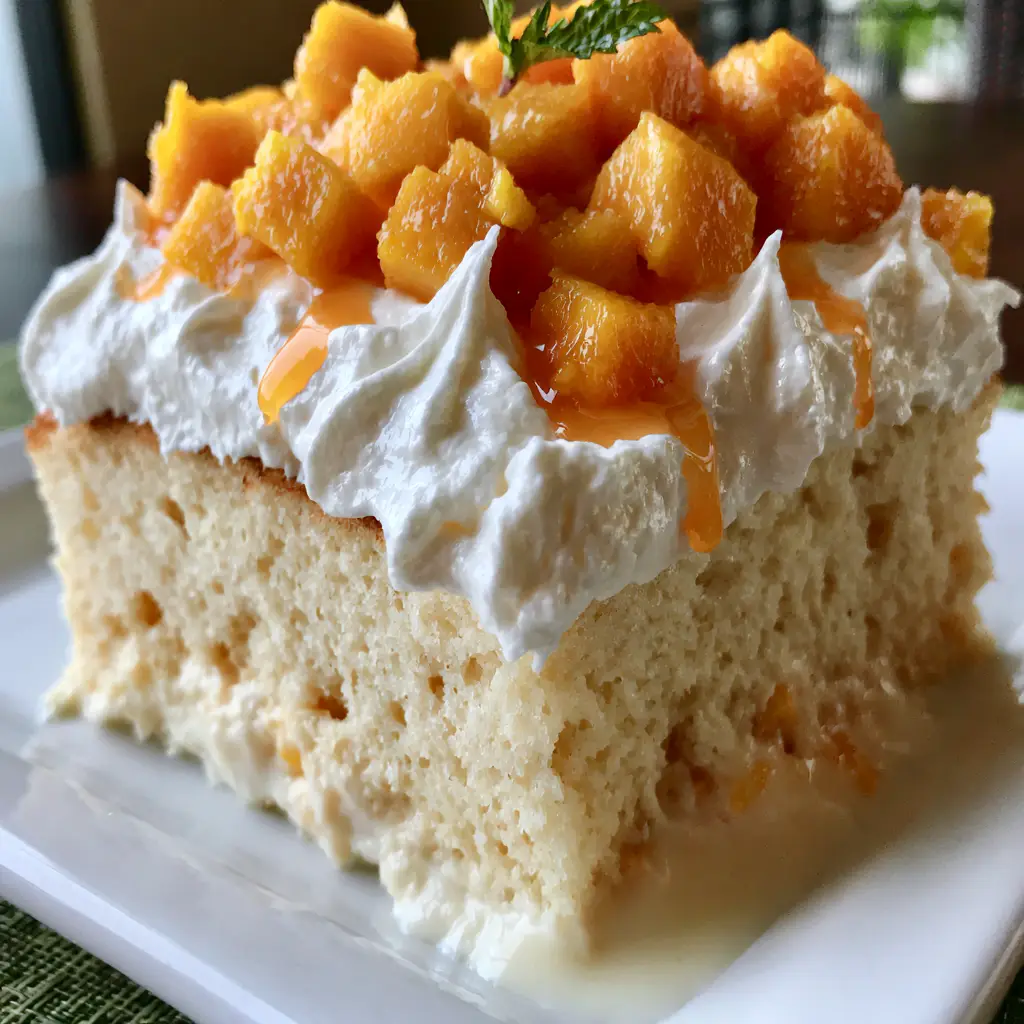
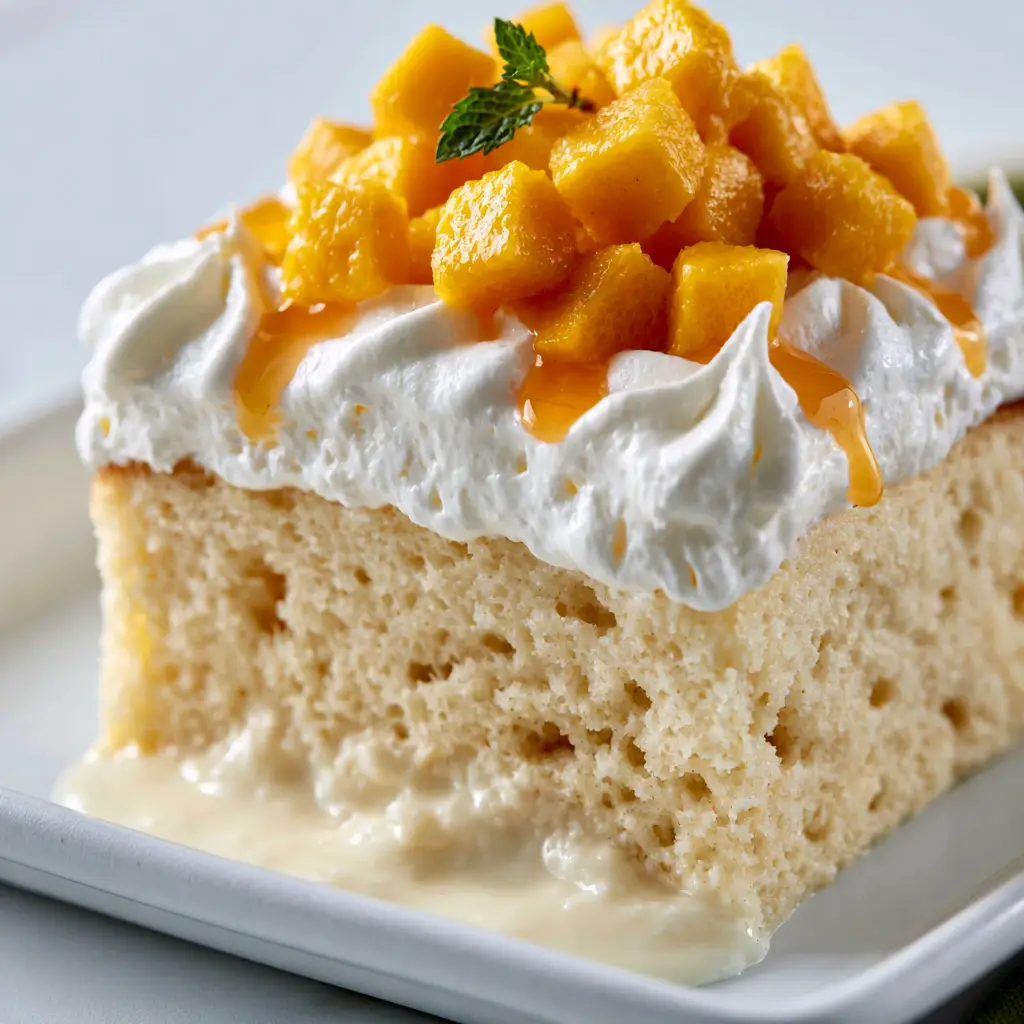
There is nothing quite as refreshing as a cold, creamy slice of mango tres leches cake on a warm afternoon. This isn’t just any sponge cake; it is a meticulously aerated vanilla canvas designed to soak up three distinct types of milk without losing its structural integrity. Imagine a tall, golden-yellow slice served on a matte white plate, its edges sharp and clean, resting in a shallow, elegant pool of sweet cream.
The crowning glory of this dessert is a thick, one-inch layer of stabilized snowy white whipped cream, topped with a vibrant pile of glistening, deep-orange Manila mangoes. Flecks of bright green lime zest and a solitary sprig of fresh organic mint provide the final aromatic touch. Every bite offers a contrast between the rich, milk-saturated sponge and the bright, acidic pop of perfectly ripe tropical fruit.
Whether you are hosting a summer soirée or looking for the perfect weekend project, this mango tres leches cake delivers professional-grade food styling results right in your home kitchen. By following our forensic approach to the traditional Latin American classic, you will achieve the hyper-realistic textures and flavors seen in the world’s most elite patisseries.
Why This Mango Tres Leches Cake Recipe Is a Game-Changer
- Perfectly Aerated Sponge: We utilize a specific egg-foam technique to create a light, porous crumb that acts like a thirsty sponge for the milk soak.
- Structural Integrity: Despite being saturated with cream, this cake maintains a clean, vertical edge that doesn’t sag or crumble when sliced.
- Stabilized Cream Topping: A one-inch (2.5cm) layer of whipped cream that holds its soft peaks even in warmer temperatures.
- Manila Mango Profile: We focus on the buttery, fiberless texture of Manila mangoes to ensure every mouthful is velvety smooth.
The Essential Components for a Tropical Milk Cake
To achieve the visual and textural success of this mango tres leches cake, you must start with the right ingredients. Each component serves a scientific purpose, from the protein structure of the eggs to the fat content of the milks.
The Aerated Vanilla Sponge Base
Large Eggs: You will need 5 large eggs at room temperature. The proteins in the eggs provide the necessary structure to hold the weight of the liquid soak without the cake collapsing into mush.
All-Purpose Flour: 1.5 cups (190g) of flour provides enough gluten for stability while remaining light enough to allow for maximum aeration. Always sift your flour to prevent dense pockets in the sponge.
Baking Powder: 1 tsp (5g) acts as a chemical leavener to assist the egg foam, ensuring the cake rises evenly and creates those “milk-catching” pores.
Granulated Sugar: 1 cup (200g) sweetens the base and helps stabilize the egg whites during the whipping process. This is crucial for the “golden-yellow” hue described in our visual blueprint.
The Signature Three-Milk Soak
Sweetened Condensed Milk: 1 can (14oz / 397g) provides the thick, syrupy sweetness that characterizes a true tres leches. It gives the soak its “liquid gold” viscosity.
Evaporated Milk: 1 can (12oz / 354ml) adds a concentrated milky flavor without the water content of fresh milk. It is the bridge between the heavy cream and the condensed milk.
Heavy Cream: 0.25 cup (60ml) is mixed into the soak to add a luxurious mouthfeel and fat content that lingers on the palate. If you enjoy this flavor profile, you might also love our creamy mango mousse cake.
The Stabilized Topping and Garnish
Stabilized Whipped Cream: 2 cups (480ml) of cold heavy cream whipped with 0.25 cup (30g) of powdered sugar. We recommend adding a stabilizer like 1 tsp (5g) of gelatin or mascarpone to ensure the 1-inch thick layer remains pristine.
Ripe Manila Mangoes: 3 large Manila mangoes, cubed into perfect 0.5-inch (1.25cm) pieces. Their deep orange color and lack of fibers make them the elite choice for this recipe.
Fresh Lime Zest & Mint: These aren’t just for color; the lime zest cuts through the fat of the cream, while the mint provides a cooling aromatic finish.
Professional Equipment for the Perfect Slice
To get those “sharp, clean vertical edges,” the tools you use are just as important as the ingredients. You will need a 9×13 inch (23x33cm) glass or ceramic baking dish for the traditional approach, or a high-sided springform pan if you want to display the cake’s tall profile.
A stand mixer with a whisk attachment is essential for achieving the necessary volume in your egg foam. You will also need a long, thin skewer or a fork to “dock” the cake, creating the pathways for the milk to travel. Finally, a sharp chef’s knife dipped in hot water and wiped clean between every cut is the secret to that professional, clean-edged presentation.
Mastering the Aerated Vanilla Sponge
Step 1: Whipping the Egg Foundation
Preheat your oven to 350°F (175°C). Separate your egg whites and yolks into two clean bowls. Begin whipping the whites on medium-high speed until soft peaks form.
Gradually add 0.75 cup (150g) of the sugar to the whites, continuing to whip until they are glossy and hold a stiff peak. In the other bowl, beat the yolks with the remaining 0.25 cup (50g) of sugar until they are pale yellow and double in volume.
Step 2: Folding for Maximum Volume
Gently fold the yolk mixture into the whites using a large spatula. Sift the flour and baking powder over the top in three stages, folding carefully to avoid deflating the air you worked so hard to incorporate. The batter should look like a thick, pale yellow cloud.
Pour the batter into your ungreased pan. Smoothing the top is vital for a level cake. Bake for 25-30 minutes until the top is golden-yellow and a skewer comes out clean. If you’re a fan of fruit-forward baking, consider trying our mango strawberry cupcakes next.
The Science of the Three-Milk Saturation
Step 3: Creating the Milk Pathways
Allow the cake to cool for at least 30 minutes. Once it is slightly warm to the touch, take your skewer and poke holes across the entire surface, spaced about 0.5 inches (1.25cm) apart. Do not be shy; these holes ensure the mango tres leches cake is “visibly moist and saturated” as per our visual prompt.
Step 4: The Slow Pour Technique
Whisk together the condensed milk, evaporated milk, and the 0.25 cup (60ml) of heavy cream. Pour the mixture slowly over the cake, starting from the edges and moving toward the center. It will look like a lot of liquid, but the aerated sponge will drink it up.
Cover the cake and refrigerate for a minimum of 6 hours, though overnight is preferred. This chilling time is what allows the cake to set, creating that “sharp vertical edge” that doesn’t sag when you plate it.
Achieving the Iconic Mango Topping
Step 5: Preparing the Stabilized Cream
Whip your heavy cream, powdered sugar, and stabilizer until stiff peaks form. Spread this in a thick, uniform 1-inch (2.5cm) layer over the chilled cake. Use an offset spatula to create the “soft peaks” and decorative swirls seen in professional food styling.
Step 6: The Final Mango Garnish
Peel and cube your Manila mangoes. Pile them generously in the center of the cake or across each individual slice. The fruit should look “glistening” and “deep-orange.”
Finish with a fine dusting of lime zest flecks and a small, vibrant sprig of fresh mint. The contrast of the orange fruit against the snowy white cream is what makes the mango tres leches cake truly pop. For a savory contrast to this sweet treat, a Thai mango salad makes an excellent side dish for a summer lunch.
Expert Tips for Success
- Temperature Control: Ensure your heavy cream and mixing bowl are ice-cold before whipping to achieve the most stable peaks.
- Mango Selection: Look for Manila mangoes that give slightly to pressure and have a strong, sweet aroma at the stem; this ensures that “glistening” ripe look.
- The Clean Slice: Dip your knife in hot water and wipe it dry between every single cut to maintain the sharp, clean vertical edges of the sponge.
- Saturation Check: If you see a “thin, elegant pool” of milk at the bottom of the plate, you have achieved the perfect saturation level.
Storage and Make-Ahead Advice
This mango tres leches cake actually improves with time as the milks meld with the sponge. You can bake and soak the sponge up to 2 days in advance. However, for the best visual results, add the whipped cream and fresh mangoes just before serving to prevent the fruit from oxidizing or the cream from absorbing any refrigerator odors.
Store leftovers in an airtight container in the refrigerator for up to 3 days. We do not recommend freezing this cake, as the freezing and thawing process will destroy the delicate cell structure of the saturated sponge, leading to a grainy texture.
What to Serve With Mango Tres Leches
This rich dessert pairs beautifully with light, acidic, or savory-salty dishes that cleanse the palate. Consider serving it after a vibrant fresh mango salad or a spicy main course to balance the heat. The creamy texture also complements crunchy textures found in a crispy ramen noodle salad.
Frequently Asked Questions
It is not recommended. The fat in heavy cream and evaporated milk is essential for the structure and rich mouthfeel. Low-fat milks will make the cake watery and prone to sagging.
The secret is chilling the cake for at least 6-8 hours so the milk sets into the sponge structure. Use a sharp, hot knife wiped clean after every single cut to maintain the sharp vertical edge.
Use stabilized whipped cream by adding a teaspoon of unflavored gelatin or a tablespoon of mascarpone. This allows you to stack the cream 1-inch high without it collapsing under the weight of the mangoes.
Manila mangoes (also known as Ataulfo) are the best choice because they are fiberless, buttery, and have a deep orange color that looks beautiful on top of the white cream.
Sogginess usually occurs if the sponge isn’t aerated enough or if it’s soaked while still hot. Ensure you whip your eggs to stiff peaks and let the cake cool for 30 minutes before adding the milk soak.
The Definitive Mango Tres Leches Cake Recipe
Mango Tres Leches Cake: The Ultimate Tropical Summer Dessert
Ingredients
Equipment
Method
- Separate whites and yolks. Whip whites with 3/4 cup sugar to stiff peaks. Whip yolks with 1/4 cup sugar until pale and thick.
- Fold yolks into whites, then fold in sifted flour and baking powder. Bake at 350°F (175°C) for 25-30 minutes.
- Poke holes throughout the cooled cake using a skewer.
- Whisk the three milks together and pour slowly over the cake. Chill for 6+ hours.
- Whip 2 cups cream with powdered sugar to stiff peaks. Spread a 1-inch layer over the cake.
- Top with cubed mangoes, lime zest, and mint sprig.
Notes
Use a hot, clean knife for the sharpest slices.
Closing & Call to Action
This mango tres leches cake is more than a dessert; it is a celebration of tropical flavors and technical baking. The combination of the airy sponge, the decadent milk soak, and the fresh Manila mangoes creates a sensory experience that is hard to beat. We invite you to try this recipe and share your results! Did you get that perfect 1-inch cream layer? Let us know in the comments below.
If you loved this visual guide, don’t forget to save it to your “Dessert Goals” board on Pinterest. Happy baking!