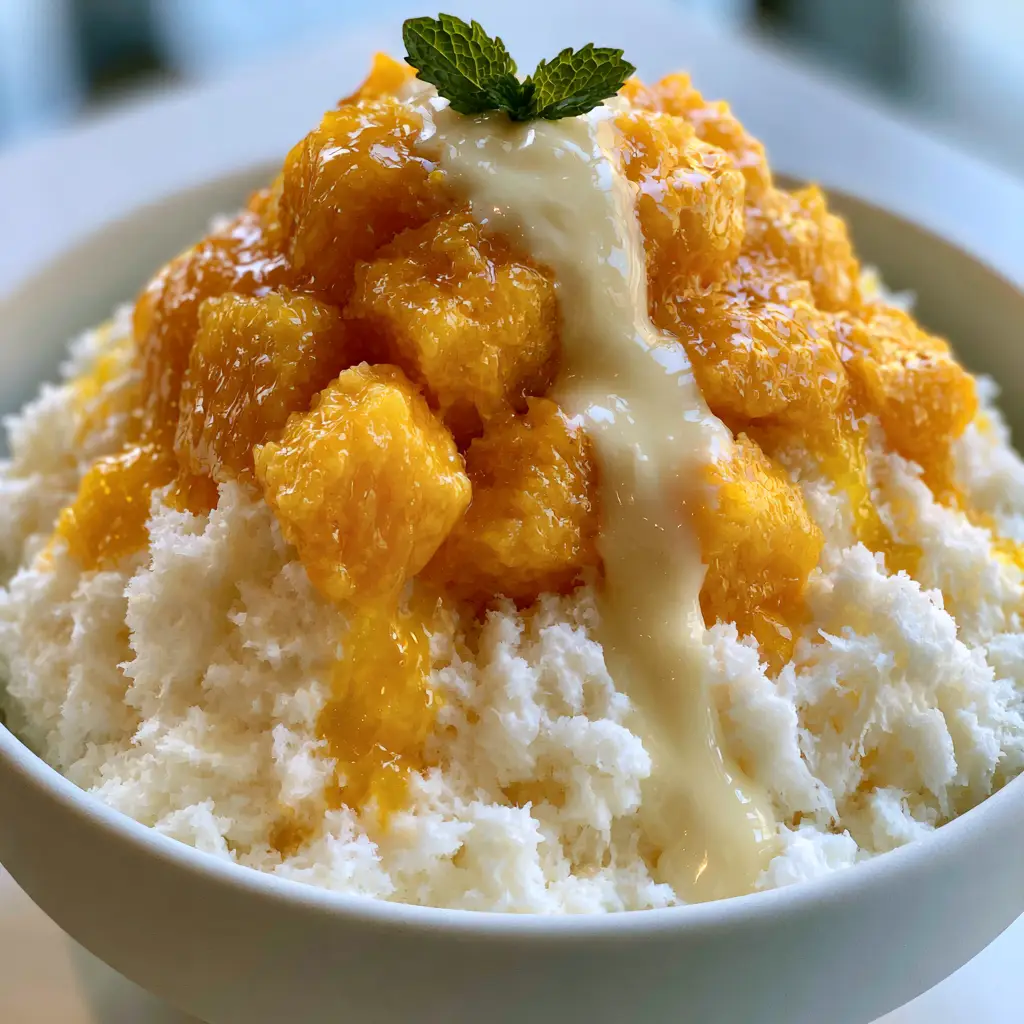
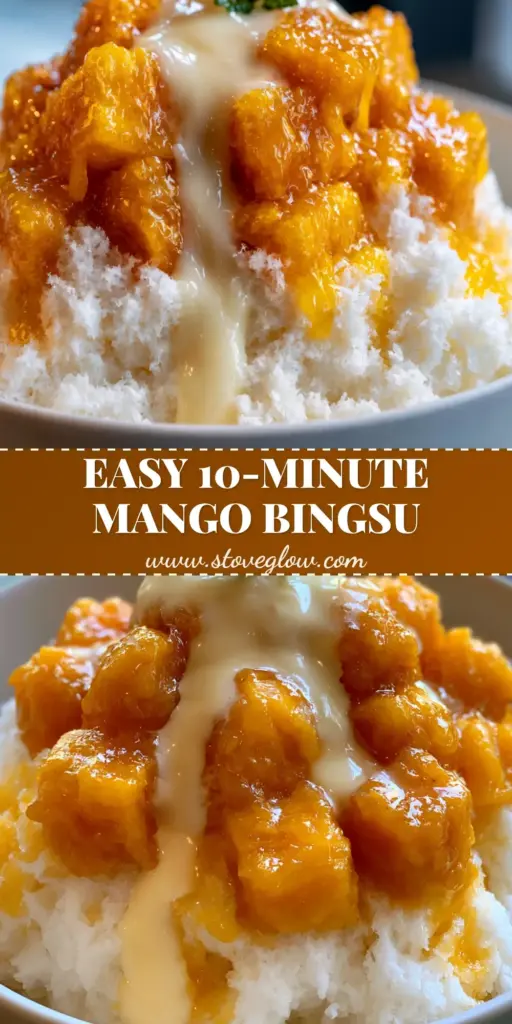
The mango bingsu is more than just a dessert; it is a cooling architectural marvel that defines the sweltering afternoons of a Seoul summer. Imagine a mountain of ultra-fluffy, crystalline snowy white milk ice flakes that melt the instant they touch your tongue.
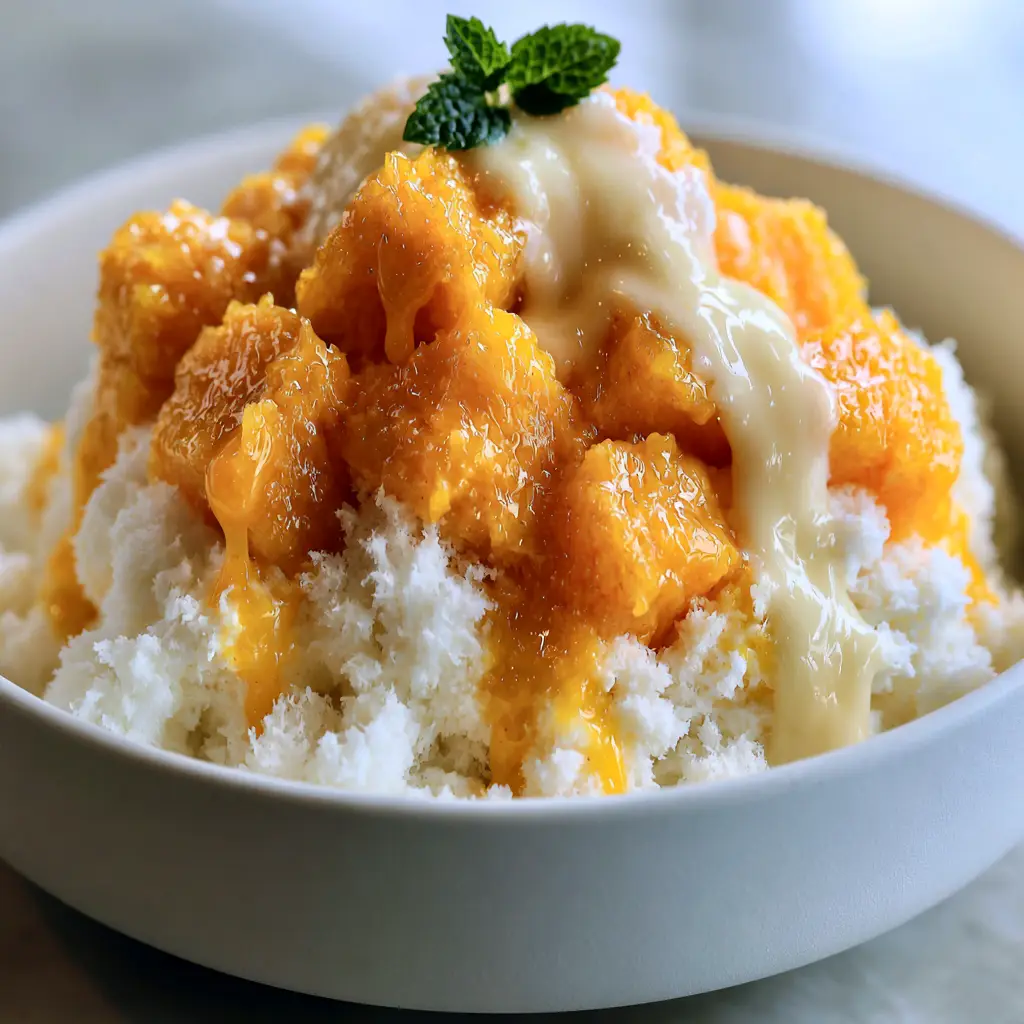
This recipe captures that exact sensory experience, topped generously with perfectly cubed, vibrant orange-yellow honey mango chunks that look juicy and glistening under a window’s natural light. The finishing touch is a thick, viscous stream of ivory sweetened condensed milk, creating glossy ribbons that weave through the fruit and ice.
Whether you are recreating a memory from a Korean cafe or trying this tropical delight for the first time, our guide ensures a professional result using simple home tools. A single tiny bright green mint sprig sits at the peak, providing a pop of color that makes this dish as beautiful as it is delicious.
Why This Mango Bingsu Will Be Your New Favorite Treat
- Unmatched Texture: Unlike traditional water-based shaved ice, this milk-based “snow” is creamy, rich, and impossibly light.
- Visual Masterpiece: The contrast between the snowy white base and the vibrant orange-yellow honey mango creates a restaurant-quality presentation.
- Natural Sweetness: By using honey mangos, we achieve a deep, floral sweetness that balances the rich condensed milk perfectly.
- Simple Luxury: With only a handful of ingredients, you can create a dessert that looks like it belongs in a high-end food photography studio.
Foundational Ingredients for the Creamiest Milk Snow
Whole Milk (500ml / ~2 cups): This is the backbone of your snow, providing the fat content necessary for a creamy mouthfeel rather than a gritty, icy one.
Sweetened Condensed Milk (120ml / 0.5 cup): This is used twice—once to sweeten the milk base before freezing, and again as a thick, viscous drizzle for those iconic glossy ribbons.
Fresh Honey Mangos (2-3 large): Also known as Ataulfo mangos, these are essential for their lack of fibers and their intense, vibrant orange-yellow hue.
Fresh Mint Leaves (1-2 sprigs): A tiny bright green mint sprig at the peak provides a necessary aromatic contrast and a professional visual finish.
Granulated Sugar (1 tbsp / 15g): A small amount added to the milk mixture ensures the ice crystals remain soft and easy to shave.
Pinch of Fine Sea Salt: An invisible but critical ingredient that heightens the floral notes of the mango and the richness of the dairy.
The Essential Kit: Achieving That Crystalline Texture
To achieve the “ultra-fluffy” crystalline texture described in our visual blueprint, you don’t necessarily need a $2,000 industrial bingsu machine. A high-powered blender or a simple hand-held ice shaver can work wonders.
If you are using the “freeze and shave” method, a heavy-duty freezer bag and a rolling pin can also create a rustic, snowy texture. However, for the most professional “mountain” look, a food processor with a shaving blade is your best friend.
You will also need a minimalist white ceramic bowl to let the colors of the mango truly pop. A silver dessert spoon is the preferred tool for serving, allowing you to lift a perfect spoonful of snowy ice and mango together.
Step-by-Step: Crafting Your Tropical Ice Mountain
1. Preparing the Infused Milk Base
In a large measuring jug, combine 2 cups (500ml) of whole milk with 2 tablespoons (30ml) of sweetened condensed milk, 1 tablespoon (15g) of sugar, and a pinch of salt. Stir vigorously until the sugar is completely dissolved and the mixture is uniform.
Pour this mixture into a shallow, freezer-safe container or a zip-top bag laid flat. Freeze for at least 6 hours, or until rock solid, to ensure the ice crystals shave into fine flakes rather than slush.
2. Mastering the Mango Cube
While the milk base freezes, prepare your honey mangos. Slice the “cheeks” off the pit, then use a sharp paring knife to score a 1/2-inch (1.25cm) grid pattern into the flesh without piercing the skin.
Invert the skin to “pop” the cubes outward, then carefully slice them away from the peel. You want perfectly cubed, vibrant orange-yellow honey mango chunks that look juicy and glistening for that high-resolution photography look.
3. Shaving the Snowy Flakes
Remove the frozen milk from the freezer and let it sit at room temperature for 3-5 minutes to “temper.” This prevents the ice from being too brittle and helps create those crystalline snowy white milk ice flakes.
Process the ice in your food processor or blender in short pulses. Watch for the visual cue: the ice should look like fresh, dry winter snow—not wet or clumpy.
4. The Architecture of Assembly
Work quickly to prevent melting. In your minimalist white ceramic bowl, create a foundational layer of milk snow, then add a small hidden layer of mango cubes in the center.
Mound the remaining snow on top to create a steep mountain. Gently press the remaining mango cubes into the sides and top of the snow mountain, ensuring they are generously distributed.
5. The Final Glossy Drizzle
Take your remaining sweetened condensed milk and, using a spoon or a squeeze bottle, create a thick, viscous stream over the top. Aim for glossy ribbons that catch the light and flow down the “slopes” of the mango chunks.
Place a single tiny bright green mint sprig at the very peak. Serve immediately with a silver dessert spoon partially submerged to invite that first perfect bite.
Chef’s Secrets for Flawless Fruit Prep
To ensure your mango bingsu looks as good as it tastes, fruit selection is paramount. Look for mangos that give slightly to pressure and have a sweet, fruity aroma at the stem end.
If your mangos are slightly under-ripe, you can toss the cubes in a teaspoon of honey to give them that “glistening” appearance required by our visual blueprint. This also mirrors the flavors found in a mango mousse cake.
For a complete tropical dessert spread, consider serving this alongside a mango tres leches cake or even some mango strawberry sunset cupcakes for a variety of textures.
How to Store and Enjoy Your Bingsu
Bingsu is a “live” dessert, meaning it is best enjoyed the second it is assembled. The crystalline structure of the milk ice begins to collapse as soon as it hits room temperature.
If you have leftover milk ice, store it in the back of the freezer in an airtight container. However, do not store the assembled bingsu, as the mango will soften and the condensed milk will cause the snow to melt into a puddle.
Perfect Pairings for a Full Korean Feast
The icy sweetness of mango bingsu is the traditional way to cool down after a spicy meal. It is the perfect functional pairing for a bowl of fiery buldak (Korean fire chicken).
If you prefer a lighter meal before dessert, a vibrant Thai mango salad creates a wonderful thematic bridge between the savory and sweet courses. The acidity of the salad cleanses the palate, making the rich milk snow taste even more indulgent.
Frequently Asked Questions
Yes! You can freeze the milk mixture in a zip-top bag and crush it with a rolling pin, or use a standard food processor to shave the frozen block into fine, snowy flakes.
You can use coconut milk or oat milk, but the texture may be slightly different. Coconut milk works particularly well with mango and provides a similar fat content for creaminess.
Yes. While both are shaved ice, Bingsu usually uses a frozen milk base for a creamy texture, whereas Kakigori typically uses plain water ice with flavored syrups.
Honey mangos (also known as Ataulfo or Manila mangos) are best because they are non-fibrous, incredibly sweet, and have a vibrant orange-yellow color.
Bingsu ice is very fine and delicate. To slow melting, pre-chill your ceramic bowl in the freezer for 30 minutes before assembling the dessert.
The Ultimate Mango Bingsu Recipe
Mango Bingsu: The Ultimate Korean Milk Ice Recipe for Summer
Ingredients
Equipment
Method
- Whisk whole milk, 2 tbsp condensed milk, sugar, and salt in a jug until dissolved.
- Pour into a shallow container and freeze for 6 hours until rock solid.
- Slice and cube the honey mangos into uniform, glistening 1/2-inch pieces.
- Pulse the frozen milk in a food processor until it reaches a crystalline, snowy white flake consistency.
- Mound the snow in a white ceramic bowl, top with mango cubes, and drizzle with remaining condensed milk in glossy ribbons.
- Place a mint sprig at the peak and serve immediately with a silver spoon.
Notes
Use only ripe honey mangos to avoid a fibrous texture.
Join the Bingsu Obsession!
We hope this recipe brings a cool breeze into your kitchen. There is nothing quite like the satisfaction of shattering that first layer of milk snow with a silver spoon. If you enjoyed this tropical journey, please leave a comment below and let us know how your “ice mountain” turned out!
Don’t forget to share your creations with us on Pinterest and follow KellyTaste for more visually stunning, SEO-optimized recipes that bring the world’s best flavors to your home table.