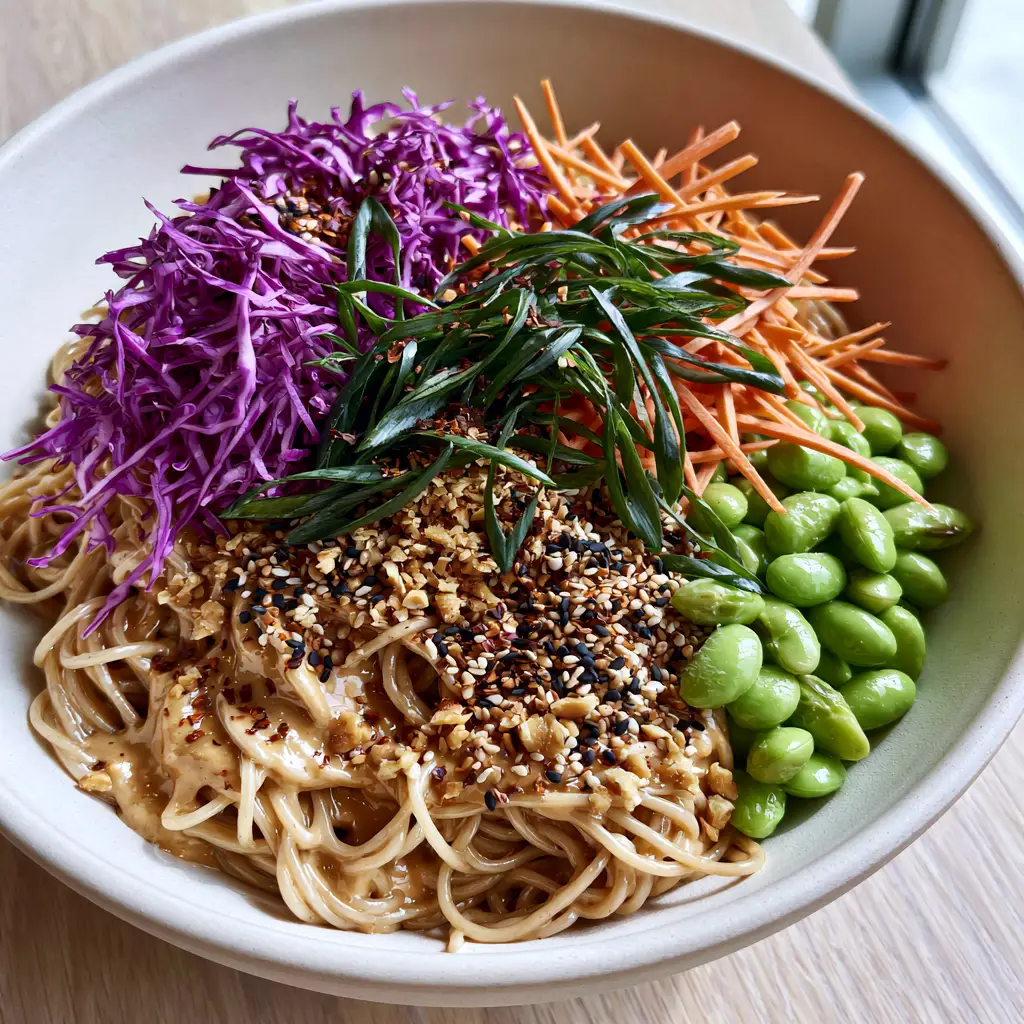
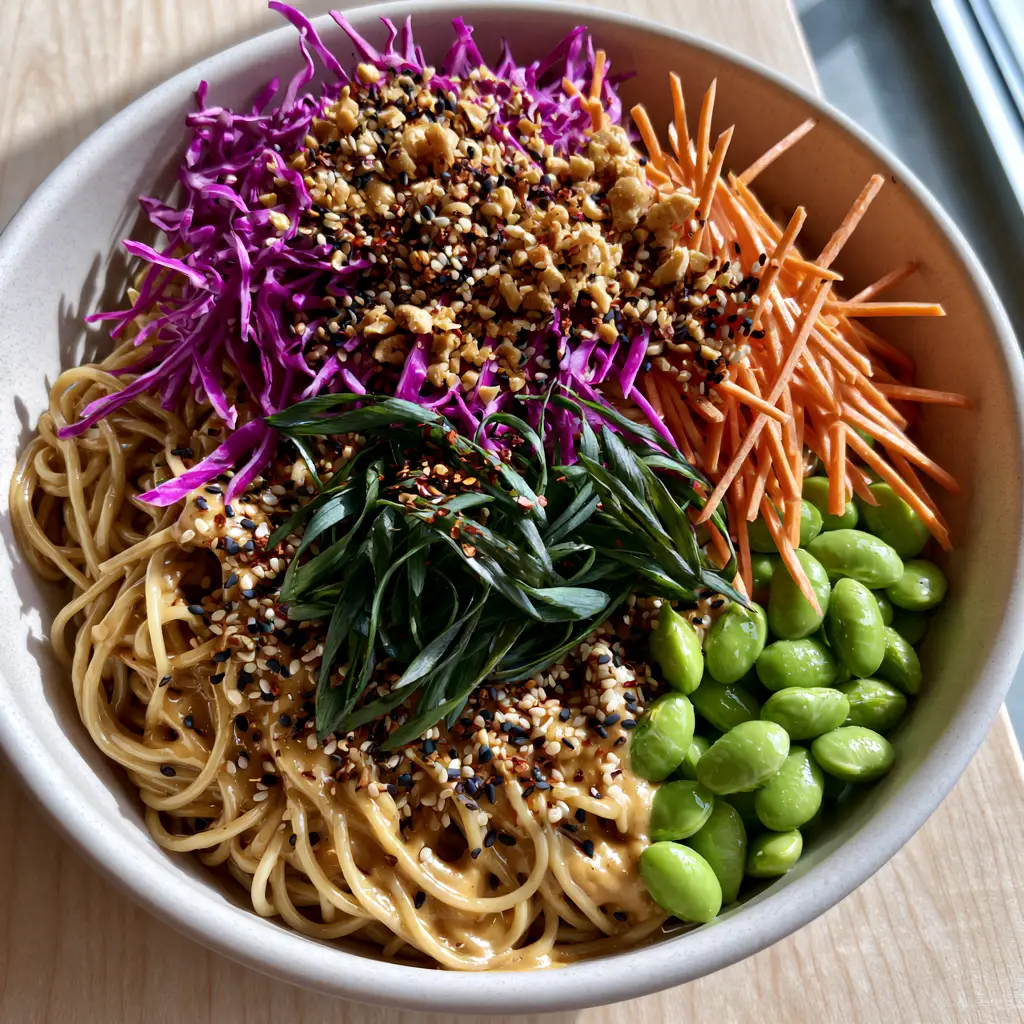
The perfect sesame noodle salad is a masterclass in texture, color, and balanced aromatics. This dish is designed to satisfy the craving for something both refreshing and deeply indulgent, featuring long, thin wheat noodles coated in a shimmering, tan peanut-sesame sauce that catches the light beautifully.
Every bite of this sesame noodle salad offers a symphony of sensations. From the crunch of finely shredded purple cabbage to the snap of blanched edamame, it is a meal that looks as spectacular in a modern ceramic bowl as it tastes on the fork.
Whether you are looking for a high-protein lunch or a vibrant side dish for your next gathering, this recipe delivers a professional-grade culinary experience. Let’s dive into the science and artistry behind this viral-worthy noodle bowl.
Why This Vibrant Cold Noodle Bowl Works Every Single Time
Achieving the perfect sesame noodle salad requires more than just mixing ingredients; it requires an understanding of how fat, acid, and starch interact to create that iconic “glossy” finish. Here is why this specific recipe stands out in a crowded culinary landscape.
- The Emulsion Factor: We utilize a specific ratio of creamy peanut butter and toasted sesame oil to create a sauce that clings to every strand of noodle without becoming gummy.
- Visual Contrast: By using both toasted black and white sesame seeds alongside bright purple cabbage, we create a high-contrast visual that is as appetizing as it is nutritious.
- Textural Layering: The combination of soft wheat noodles, crisp julienned carrots, and crushed roasted peanuts provides a varied mouthfeel that prevents “palate fatigue.”
- Umami Depth: Beyond the sesame, we incorporate foundational aromatics and acidity that elevate the dish from a simple salad to a complex, savory meal.
The Essential Components for a Vibrant Sesame Noodle Salad
To recreate the exact look of our visual blueprint, each ingredient must be selected for its specific contribution to the final aesthetic and flavor profile. Quality matters when the ingredients are this fresh.
Long Thin Wheat Noodles: 8 oz (225g) of dried noodles. Wheat noodles provide the necessary structural integrity to hold the heavy peanut sauce while maintaining a silky, “slurpable” texture when served cold.
Creamy Peanut Butter: 1/2 cup (125g). This is the base of our shimmering sauce, providing the fat necessary for a rich mouthfeel and a beautiful tan hue that glows under soft lighting.
Toasted Sesame Oil: 2 tbsp (30ml). This “liquid gold” provides the signature toasted aroma and helps thin the peanut butter into a pourable, glossy coating for the wheat noodles.
Rice Vinegar: 3 tbsp (45ml). The essential acid that cuts through the richness of the peanut butter, brightening the entire flavor profile of the sesame noodle salad.
Soy Sauce: 3 tbsp (45ml). This provides the deep umami saltiness and contributes to the golden-tan color of the sauce seen in the high-end photography.
Honey or Maple Syrup: 1 tbsp (20g). A touch of sweetness rounds out the sharp vinegar and salty soy, creating a balanced “360-degree” flavor profile.
Fresh Ginger and Garlic: 1 tbsp (6g) each, finely grated. These “invisible” foundational ingredients provide the aromatic backbone that makes the sauce taste professional and complex.
Purple Cabbage: 1 cup (70g), finely shredded. This adds a massive pop of vibrant color and a necessary raw crunch that contrasts with the soft noodles.
Julienned Carrots: 1 medium carrot (approx. 60g). These “needle-thin matchsticks” provide sweetness and a bright orange hue that complements the purple cabbage perfectly.
Green Edamame: 1/2 cup (75g), shelled and blanched. These plump, bright green beans provide a boost of plant-based protein and a buttery texture.
Fresh Scallions: 3 medium stalks, thinly sliced. The dark green rounds provide a fresh, oniony bite and are essential for the “heavy scattering” finish described in the visual prompt.
The Crunch Garnish: 2 tbsp (18g) crushed roasted peanuts and 1 tsp (3g) each of toasted black and white sesame seeds. These are the final textural jewels of the dish.
Dried Red Chili Flakes: 1/2 tsp (1g). For a subtle sprinkle of heat and a tiny fleck of red to complete the color spectrum of the salad.
Precision Tools for a Professional Presentation
To achieve the “needle-thin” vegetables and perfectly emulsified sauce shown in our matte-white ceramic bowl, you will need a few specific kitchen tools. Having the right gear makes the prep process as satisfying as the eating.
A sharp Chef’s Knife or a Mandoline Slicer is non-negotiable for the purple cabbage and carrots. To get those “needle-thin” matchsticks, a mandoline with a julienne blade is the most efficient method for home cooks.
A Large Stainless Steel Balloon Whisk is essential for the sauce. You need to vigorously emulsify the peanut butter and oils until the sauce is completely smooth and shimmering.
Finally, use a Wide Matte-White Ceramic Bowl for serving. The wide surface area allows you to display the distinct clusters of vegetables rather than having them get lost in a deep, narrow bowl.
The Culinary Science of the Perfect Noodle Texture
Mastering the Wheat Noodle Boil
The foundation of your sesame noodle salad is the noodle itself. Bring a large pot of water to a rolling boil and season it heavily with 1 tbsp (18g) of kosher salt. The water should taste like the sea.
Add the wheat noodles and cook according to the package directions, but begin testing them 1 minute before the suggested time. You are looking for a texture that is fully cooked but still has a slight “snap” or resistance (al dente).
Immediately drain the noodles in a colander and rinse them under cold running water for at least 60 seconds. This stops the cooking process and removes excess surface starch, which is the secret to preventing the noodles from sticking together in a clump.
Blanching the Edamame for Maximum Green
To get that “plump steamed bright green” look for your edamame, use the same boiling water you used for the noodles (if using frozen, shelled edamame). Boil them for just 2-3 minutes.
Immediately plunge them into an ice bath (a bowl of cold water and ice cubes). This “shocks” the chlorophyll, locking in that vibrant green color that looks so stunning against the purple cabbage.
Building the Shimmering Peanut-Sesame Emulsion
In a medium mixing bowl, combine the peanut butter, toasted sesame oil, soy sauce, rice vinegar, honey, grated ginger, and garlic. At first, the mixture may look “broken” or chunky as the liquid hits the fat.
Whisk vigorously. As you incorporate air and combine the ingredients, the sauce will suddenly transform into a thick, creamy, tan liquid with a shimmering surface. If it feels too thick to pour, add 1-2 tbsp (15-30ml) of warm water until it reaches a “glossy coating” consistency.
The Art of the Toss and Garnish Assembly
Place the cold, rinsed noodles in a large mixing bowl and pour the sauce over them. Use tongs to lift and turn the noodles until every single strand is perfectly coated. You should see the sauce catching the light, looking moist but not soupy.
Transfer the noodles to your wide white bowl. Instead of mixing the vegetables in, arrange the shredded cabbage, julienned carrots, and blanched edamame in distinct “clusters” on top. This creates the high-end food blogger aesthetic.
Finish with a heavy scattering of scallions, followed by a generous dusting of the black and white sesame seeds, crushed peanuts, and chili flakes. The goal is a dish that looks organized, fresh, and intentionally composed.
Expert Tips for Success with Cold Noodle Salads
- Noodle Choice: If you cannot find specific “wheat noodles,” you can substitute with high-quality Italian spaghetti or dried ramen noodles for a similar texture.
- The Sauce “Magic”: If you make the sauce in advance and it thickens in the fridge, whisk in a teaspoon of warm water to restore that shimmering, glossy texture before serving.
- Vegetable Moisture: After shredding the cabbage, pat it dry with a paper towel. This ensures the sauce stays thick and doesn’t get watered down by vegetable juices.
- Peanut Toasting: For the best flavor, buy whole roasted peanuts and crush them yourself just before serving. The aroma of freshly crushed peanuts is far superior to pre-crushed varieties.
The Best Ways to Store and Prep Ahead
The sesame noodle salad is an incredible candidate for meal prep. The flavors of the ginger and garlic actually deepen as they sit in the sauce.
In the Refrigerator: Store the dressed noodles and the vegetables in separate airtight containers. The noodles will stay fresh for up to 3 days. The vegetables stay crisper if they aren’t sitting in the sauce for long periods.
Reviving the Dish: If the noodles have absorbed too much sauce overnight, a quick splash of rice vinegar or a tiny drop of sesame oil will “wake up” the flavors and restore the gloss.
Freezing: We do not recommend freezing this recipe. The fresh vegetables will lose their crisp texture, and the peanut emulsion may break upon thawing.
Pairing Your Sesame Noodle Salad with Other Asian-Inspired Dishes
This salad is hearty enough to be a standalone meal, but it also pairs beautifully as part of a larger spread. If you enjoy the textures of this dish, you might also love our edamame rice noodle salad for a gluten-free alternative.
For a surf-and-turf feel, serve this alongside a zesty shrimp noodle salad. If you have leftover chicken in the fridge, it can be easily shredded and added to create a cold chicken noodle salad that is packed with protein.
For a refreshing dessert to follow this savory meal, consider the tropical notes of a fresh mango salad or a slice of mango tres leches cake.
Frequently Asked Questions
Yes! Substitute the wheat noodles for rice noodles or buckwheat soba noodles, and ensure you use Tamari instead of traditional soy sauce.
Absolutely. Tahini will provide a more earthy, bitter flavor profile. You may need to add a touch more honey to balance the flavors.
The key is rinsing the cooked wheat noodles under cold running water for at least 60 seconds to wash away the excess surface starch before tossing with the sauce.
The noodles and sauce stay fresh for up to 3 days. For maximum crunch, store the raw vegetables separately and assemble just before eating.
For the needle-thin look in the photos, use a mandoline slicer with a julienne attachment or a specialized julienne peeler for consistent, thin matchsticks.
The Ultimate Sesame Noodle Salad Recipe Card
Sesame Noodle Salad with Creamy Peanut Sauce and Vibrant Crunchy Vegetables
Ingredients
Equipment
Method
- Boil the wheat noodles in salted water until al dente. Drain and rinse under cold water for 60 seconds to remove surface starch.
- Boil shelled edamame for 2-3 minutes, then immediately shock in an ice bath to maintain a bright green color.
- Combine peanut butter, sesame oil, soy sauce, vinegar, honey, ginger, and garlic. Whisk until a shimmering, tan emulsion forms.
- Toss noodles in the sauce until glossy. Arrange purple cabbage, julienned carrots, and edamame in clusters on top. Finish with sesame seeds, peanuts, scallions, and chili flakes.
Notes
If the sauce thickens too much, whisk in 1 teaspoon of warm water to restore the gloss.
Join the Community and Share Your Creations!
We hope this sesame noodle salad becomes a staple in your kitchen rotation. It’s a dish that proves “healthy” and “indulgent” can exist in the same bowl. If you make this, we want to see it!
Leave a comment below with your favorite vegetable add-ins, and don’t forget to follow KellyTaste on Pinterest for more vibrant recipe inspiration. Save this recipe to your “Healthy Lunch” or “Viral Recipes” board so you never lose it!